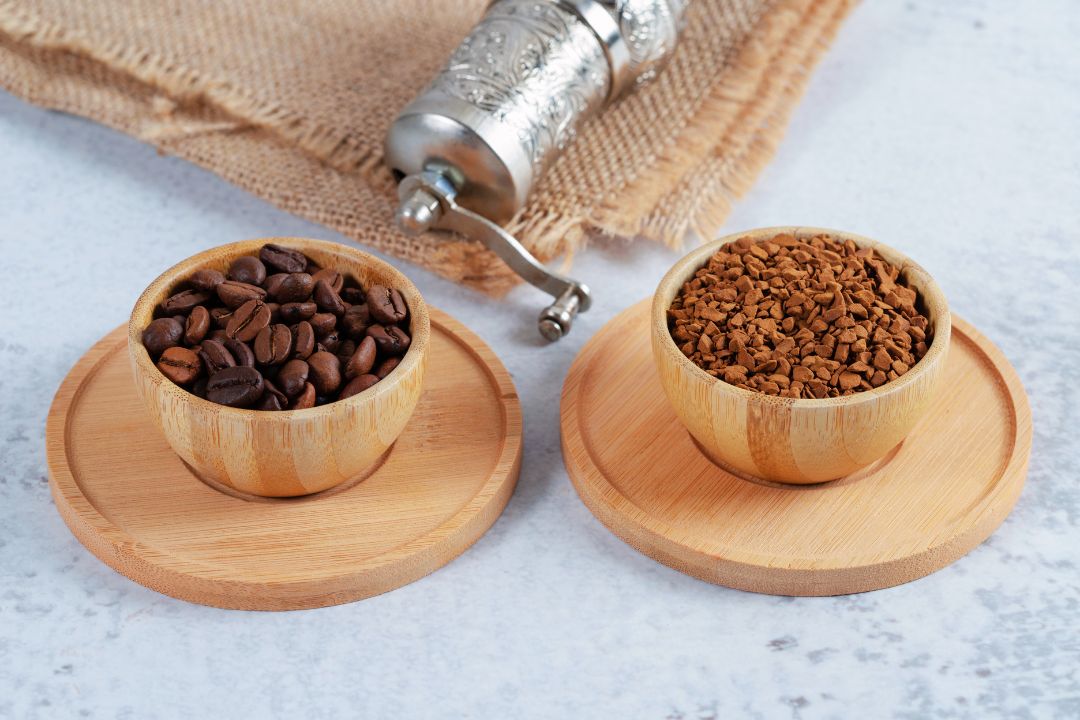
So you’ve become a “coffee convert” and want to learn how to make a more professional coffee? Then the time has come to understand more about coffee grinding.
In this article, you’ll discover what experts say about grinding coffee, why this is an important part of brewing, and the best way to do it!
Read on to learn more!
Coffee Grinding: Understanding Its Importance
Grinding coffee is basically breaking the bean into smaller pieces (particles) so that more flavor can be extracted when it comes into contact with water.
The size of the coffee particles, also known as grind size, is directly related to the time and quality of extraction.
The finer the grind, the less time it needs in contact with water and the more flavor is extracted. That’s why each brewing method requires a different type of grind.
In practice, baristas consider the appropriate grind so that during extraction the result isn’t an under-extracted beverage — that is, watery and lacking the full flavor potential of the bean.
Or, on the other hand, an over-extracted beverage, where the water’s contact with the coffee grounds is so extensive that it becomes bitter.
Why Is Freshly Ground Coffee Better?
It’s worth remembering that when you grind coffee, an oxidation process begins, meaning the bean ages and loses flavor.
This is the reason experts say it’s best to grind shortly before preparing your beverage.
This way, you preserve all the sensory characteristics of your chosen bean and enjoy a fresher, more flavorful drink!
What Are the Types of Coffee Grind?
To extract the maximum flavor potential that your chosen bean has to offer, it’s important to know or test the ideal grind type according to the brewing method.
Let’s explore some types below:
Extra Fine Grind
In this type of grind, the bean is so crushed that its texture resembles talcum powder or wheat flour. It’s widely used for preparing Turkish coffee in an ibrik.
Fine Grind
With a fine texture, the coffee grounds resemble refined sugar. Very useful for quick extraction methods or manual pressure methods.
It pairs well with espresso, the Italian moka pot, and the Aeropress, for example.
Medium Grind
In this grind, the grounds have the appearance of granulated or brown sugar. Ideal for brewing where you need better control of water passing through the coffee, such as filtered pour-over methods.
Or for those coffees that don’t need as much extraction, such as fruity coffees.
Coarse Grind
It has the appearance of coarse salt and is ideal for preparing a smoother beverage, where the coffee will be in contact with water for a longer time. French press and cold brew are excellent with this type of grind.
I Want to Buy a Grinder — Which Ones Are Recommended?
Now that you understand that grinding your coffee close to brewing time and that the size of the grounds will influence the quality of your beverage, it’s time to take your home coffee preparation to the next level.
For this, it’s good to choose a quality grinder for your home, which will allow you to achieve the appropriate grind for your chosen brewing method.
For something more casual, there are domestic grinders, with more accessible prices, but unlike professional grinders, many don’t have the option to precisely choose the grind type.
Therefore, using the texture references we mentioned above for ground coffee will help you understand how far you should grind your beans.
Among domestic grinders, you can still choose between a Manual or Electric blade grinder.
Manual Grinder
Generally speaking, the manual grinder has the option to adjust the grind type, and it also grinds the beans uniformly.
Its disadvantage is the price, as they tend to be a bit more expensive than electric ones.
As well as the physical effort, because to grind you’ll have to turn its crank and apply a little force depending on the quantity of beans.
Electric Grinder
This one, in turn, is very practical and affordable. You just need to press the button and voila!
Electric blade grinders have the disadvantage of having to determine the grind type by eye.
Furthermore, since the grinding mechanism resembles a blender, it cuts the beans into different sizes and doesn’t produce a uniform grind.
On the other hand, there are now electric grinders with adjustable settings on the market, which ensure a more consistent and precise grind, while maintaining an affordable price — to our delight!
Did You Enjoy Learning More About Coffee Grinding?
In summary, these are the main things you need to know about coffee grinding.
Of course, there are many more details that affect coffee quality, but perhaps that’s a topic for another article!
Stay here on the Consciencia Cafe blog to learn how to make your coffee with much better quality.
But if you’d prefer a coffee with fresh roasting and grinding, without all that work, just come to our coffee shop and we’ll prepare a top-notch one for you!
Cover photo: Freepik